

Dog and Cat Anxiety: Signs, What Helps, and When to Seek Extra Support
Pets may not overthink their life choices at 2am like humans do, but they can absolutely feel anxious, stressed, overwhelmed, or unsafe.
 @photo credit: Unsplash
For dogs, anxiety may look loud and obvious — barking, whining, chewing the sofa leg, following you everywhere like a tiny emotional security guard. For cats, it can be much quieter. They may hide more, overgroom, stop using the litter box properly, or suddenly seem “difficult” when they are actually stressed.
The tricky part is that anxiety in dogs and cats is not always dramatic. Sometimes it shows up as small changes in behaviour that slowly become part of their routine. And because our pets cannot say, “I’m stressed,” it is up to us to notice the signs early and help them feel safe again.
In this guide, we’ll go through the common signs of anxiety in dogs and cats, simple ways to manage stress at home, when calming supplements may help, and when it may be time to speak to a vet, medication, or a qualified animal behaviourist.
What Causes Anxiety in Dogs and Cats?
 @photo credit: Unsplash
Anxiety can happen for many reasons, and it is not always because something “bad” happened.
Some pets are naturally more sensitive. Some become anxious after a change in routine. Others may develop fear after a loud event, a stressful grooming session, a move, or a negative experience with another pet.
Common triggers include:
-
Being left alone
-
Loud noises such as thunderstorms, fireworks, construction, or renovation
-
Moving house
-
A new baby, new pet, or new housemate
-
Visitors coming over
-
Vet visits or grooming appointments
-
Travel or car rides
-
Lack of enrichment or boredom
-
Pain, illness, or age-related changes
-
Previous trauma, poor socialisation, or repeated stressful experiences
For Singapore pet owners, anxiety can also be linked to apartment living. Dogs may be triggered by corridor sounds, lift noises, neighbours walking past, or construction nearby. Cats may feel stressed by limited vertical space, unfamiliar smells, window activity, or changes in their usual environment.
The key is not to label your pet as “naughty” too quickly. Many behaviour issues are actually stress signals.
Common Signs of Anxiety in Dogs
 @photo credit: Unsplash
Dogs often show anxiety in ways that are easier for humans to notice. However, the signs can still be mistaken for bad behaviour or poor training.
Your dog may be anxious if you notice:
-
Excessive barking, whining, or howling
-
Pacing or restlessness
-
Panting when it is not hot
-
Trembling or shaking
-
Destructive chewing or scratching
-
Trying to escape
-
Following you from room to room
-
Refusing to settle
-
Drooling
-
Loss of appetite
-
Toileting indoors despite being toilet trained
-
Reactivity towards dogs, people, sounds, or movement
-
Becoming clingy before you leave the house
-
Overexcitement when you return
Separation anxiety in dogs is especially common. It is more than your dog “missing you.” A dog with true separation anxiety may panic when left alone, even for a short period. This can lead to barking, destruction, toileting accidents, or attempts to escape.
If your dog only misbehaves when alone, it may not be stubbornness. It may be distress.
Common Signs of Anxiety in Cats
 @photo credit: Unsplash
Cats are experts at pretending everything is fine. Because of this, cat anxiety is often missed until it becomes a bigger problem.
Your cat may be anxious if you notice:
-
Hiding more than usual
-
Avoiding people, pets, or certain areas of the home
-
Overgrooming or bald patches
-
Sudden aggression, swatting, biting, or hissing
-
Reduced appetite
-
Eating too quickly or not eating at all
-
Urinating or defecating outside the litter box
-
Spraying
-
Excessive vocalising
-
Restlessness at night
-
Becoming unusually clingy
-
Increased scratching on furniture
-
Sudden fear of normal household sounds
-
Tension between cats in a multi-cat home
For cats, anxiety often shows up through changes in routine. A cat that suddenly stops using the litter box, hides under the bed, or starts fighting with another cat is not “being petty.” Something may be making them feel unsafe.
Important note: litter box issues, appetite changes, aggression, and overgrooming can also be signs of medical problems. Always rule out health issues with a vet first, especially if the behaviour appears suddenly.
Anxiety or Medical Problem? Always Rule Out Pain First

@photo credit: Vet at Amaroo
Before assuming your pet has anxiety, check whether there could be a medical cause.
Pain and illness can make pets behave very differently. A dog with joint pain may suddenly become irritable. A cat with urinary discomfort may pee outside the litter box. A senior pet with cognitive changes may become restless, vocal, or confused at night.
You should speak to a vet if your pet’s behaviour change is sudden, intense, or paired with symptoms like:
-
Loss of appetite
-
Vomiting or diarrhoea
-
Limping
-
Excessive licking
-
Toileting changes
-
Weight loss
-
Lethargy
-
Sudden aggression
-
Hiding for long periods
-
Crying, trembling, or obvious discomfort
Anxiety support works best when your pet is physically well. If there is an underlying medical issue, calming products or training alone will not solve the real problem.
How to Manage Dog and Cat Anxiety at Home
 @photo credit: Mount Pleasant Animal Hospital
The goal is not to force your pet to “get over it.” The goal is to make them feel safe enough to cope, learn, and relax.
1. Create a Safe Space
Every anxious pet needs a place where they can retreat without being disturbed.
For dogs, this may be a crate, bed, playpen, quiet corner, or room away from the main activity. For cats, this may be a cat tree, covered bed, high shelf, quiet room, or cosy hiding spot.
A good safe space should be:
-
Quiet
-
Comfortable
-
Away from heavy foot traffic
-
Always accessible
-
Never used for punishment
-
Paired with positive things like treats, toys, meals, or rest
For cats, vertical space is especially helpful. A cat that can climb, perch, and observe from above often feels more in control of their environment.
2. Keep a Predictable Routine
Pets feel safer when they know what to expect.
Try to keep feeding times, walks, play sessions, and bedtime routines as consistent as possible. This is especially helpful for anxious dogs, nervous cats, senior pets, and newly adopted animals.
A predictable routine does not mean your life has to be rigid. It simply gives your pet a rhythm they can trust.
3. Use Enrichment to Reduce Stress
 @photo credit: PuzzleFeeder
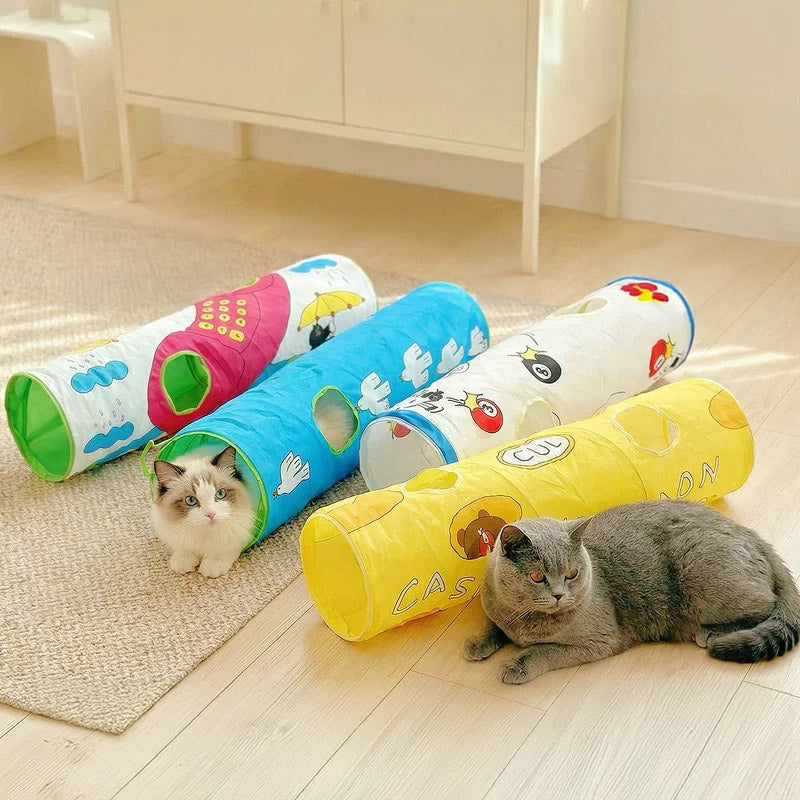
 @photo credit: CUL Cat Tunnel
Boredom and anxiety often feed each other. A pet with nothing to do may become more reactive, clingy, destructive, or restless.
For dogs, enrichment can include slow feeders, lick mats, snuffle mats, treat puzzles, chew toys, scent games, and calm sniffing walks.
For cats, enrichment can include wand toys, catnip toys, tunnels, scratchers, window perches, food puzzles, climbing furniture, and rotating toys.
The best enrichment does not need to be complicated. It just needs to give your pet an outlet for natural behaviour — sniffing, licking, chewing, hunting, scratching, climbing, and problem-solving.
4. Avoid Punishment
Punishment can make anxiety worse.
Scolding, shouting, spraying water, or forcing your pet into a scary situation may stop the behaviour in the moment, but it does not help your pet feel safer. In many cases, it teaches them that the scary thing is even more frightening.
Instead, focus on prevention, management, and positive reinforcement. Reward calm behaviour. Create distance from triggers. Make difficult situations easier before asking your pet to cope.
5. Gradually Build Confidence
Anxious pets need gradual exposure, not sudden flooding.
For example, if your dog is scared of being alone, do not suddenly leave them for hours and hope they adjust. Start with very short absences and build up slowly.
If your cat is scared of visitors, do not force them to be carried into the living room. Let them hide, observe, and come out when they are ready.
Confidence is built through repeated safe experiences.
Can Calming Supplements Help Dogs and Cats?
 @photo credit: Fera Pets
Calming supplements can be helpful for mild to moderate stress, especially when used alongside routine, enrichment, training, and a calmer environment.
They are not magic. They will not erase severe anxiety overnight. But for some pets, they can help support emotional balance and make daily stress easier to manage.
At CreatureLand, you can explore calming support for both dogs and cats:
Dog Stress & Anxiety Collection
https://creaturelandstore.com/collections/dog-stress-anxiety
Cat Stress & Anxiety Collection
https://creaturelandstore.com/collections/cat-anxiety-stress
For dogs and cats who need daily calming support, Fera Pet Organics Calming Support is formulated with ingredients such as L-Theanine, GABA, and probiotics to support relaxation and emotional balance.

Fera Pet Organics Calming Support for Dogs and Cats
For pets who prefer food toppers, the Fera Pet Organics Calm Milk Topper can be a gentler, meal-friendly option that supports relaxation while making mealtimes more enjoyable.

Fera Pet Organics Calm Milk Topper for Dogs & Cats
For pet parents looking for an organic herbal option, Kin+Kind Organic Healthy Calm Dog and Cat Supplement is another easy daily topper. It uses a simple blend of organic ingredients including flax seed, coconut, chamomile, hawthorn berry, and ginger. This can be a good option for pets who may benefit from gentle herbal support during stressful routines, environmental changes, or moments when they seem more unsettled than usual.

Kin+Kind Organic Healthy Calm Dog and Cat Supplement
There is also Good Gut Better Mood for Dog and Cat, which focuses on the gut-brain connection. This supplement contains Lactobacillus plantarum, Lactobacillus rhamnosus, Bifidobacterium longum, prebiotics, and plant carbohydrates to support gut balance and emotional well-being. It may be suitable for pets whose stress also shows up through digestive sensitivity, restlessness, hiding, excessive grooming, changes in litter box habits, or difficulty settling.

Good Gut Better Mood For Dog and Cat
For pets who may benefit from a more complete stress-support routine, the Fera Pets No Stress Bundle includes calming support options that can be used as part of a daily wellness plan.

As with any supplement, always follow the feeding guide on the product label. If your pet is pregnant, nursing, senior, on medication, or has existing health conditions, check with your vet before adding a new supplement.
Most importantly, supplements work best as part of a bigger anxiety plan. Pair them with a safe space, predictable routine, enrichment, gentle behaviour training, and veterinary support when needed.
When Are Supplements Not Enough?
 @photo credit: Shutterstock
Supplements may support calmness, but they are not a replacement for veterinary care, behaviour modification, or medication when anxiety is severe.
You may need extra help if your pet:
-
Panics when left alone
-
Hurts themselves trying to escape
-
Destroys doors, crates, or furniture from distress
-
Shows aggression towards people or pets
-
Stops eating due to stress
-
Has repeated litter box issues
-
Overgrooms until the skin is sore
-
Cannot recover after a trigger
-
Is anxious almost every day
-
Is affecting your sleep, home, safety, or relationship with them
A good rule of thumb: if your pet is suffering, you are suffering, or the behaviour is becoming unsafe, it is time to get professional help.
When Should Medication Be Used for Dog or Cat Anxiety?
 @photo credit: Shutterstock
Medication is sometimes needed for anxiety, and it should not be seen as a failure.
For some pets, anxiety is so intense that they cannot learn, relax, or respond to training. Medication prescribed by a vet can help reduce that emotional overload so behaviour modification can actually work.
Medication may be considered for:
-
Severe separation anxiety
-
Noise phobias
-
Panic during thunderstorms or fireworks
-
Severe travel anxiety
-
Vet visit fear
-
Compulsive behaviours such as overgrooming
-
Anxiety-related aggression
-
Pets who cannot settle despite environmental changes
-
Cases where anxiety is affecting quality of life
Some medications are used daily for longer-term anxiety. Others may be used only for specific events, such as vet visits, grooming, travel, fireworks, or thunderstorms.
Never give human medication, leftover medication, or another pet’s prescription to your dog or cat. Anxiety medication must be prescribed by a vet, with the correct dosage and safety checks for your pet’s age, weight, health condition, and other medications.
Medication works best when paired with behaviour modification. It is not about “sedating” your pet into silence. It is about lowering distress so your pet can feel safe enough to learn.
When Should You See an Animal Behaviourist?
 @photo credit: Shutterstock
A qualified animal behaviourist can help identify why your pet is anxious and create a structured plan that fits your home.
This is especially useful when the behaviour is complex, long-term, or affecting safety.
Consider working with an animal behaviourist if:
-
Your dog has separation anxiety
-
Your dog reacts strongly to dogs, people, sounds, or movement
-
Your cat is fighting with another cat at home
-
Your cat is hiding constantly or spraying
-
Your pet shows fear-based aggression
-
Your pet has trauma or poor socialisation history
-
You have tried managing it yourself but nothing is improving
-
You feel overwhelmed and unsure what to do next
For best results, look for a qualified force-free trainer, certified behaviour consultant, or veterinary behaviourist. In more serious cases, your regular vet may refer you to a veterinary behaviour specialist who can assess both medical and behavioural needs.
A Simple Anxiety Support Plan for Pet Owners
 @photo credit: Shutterstock
If you are not sure where to start, begin here.
First, observe your pet’s behaviour. Write down what happens, when it happens, and what may have triggered it. Is it only when you leave? Only during storms? Only when visitors come? Only around another pet?
Next, rule out medical issues with your vet, especially if the behaviour is sudden.
Then, adjust the environment. Create a safe space, reduce exposure to triggers where possible, and add calming routines.
After that, increase enrichment. Use food puzzles, slow feeders, sniffing games, scratchers, wand play, climbing spaces, or calming chews depending on your pet’s species and personality.
You can also consider calming supplements as part of the routine, especially for mild to moderate stress.
Finally, seek professional help early if the anxiety is severe, unsafe, or not improving. You do not have to wait until things become unmanageable.
Final Thoughts: An Anxious Pet Is Not a Bad Pet
Anxiety in dogs and cats can be frustrating, especially when it affects your home, sleep, furniture, or daily routine. But anxious pets are not trying to be difficult. They are trying to cope with a world that feels too loud, too lonely, too unpredictable, or too overwhelming.
With patience, routine, enrichment, the right calming support, and professional help when needed, many pets can become more confident and settled over time.
Start small. Notice the signs. Make their world feel safer.
And if your pet needs extra support, that does not mean you have failed them. It means you are listening.

Written by Creatureland store




Leave a comment
This site is protected by hCaptcha and the hCaptcha Privacy Policy and Terms of Service apply.