






Human Food That Is Safe for Cats: What Can Cats Eat From Your Plate?
What human food can cats eat?
Many healthy adult cats can have a small amount of plain, cooked, boneless chicken, turkey or fish, or fully cooked egg as an occasional treat. Everyday meals should be complete and balanced cat food for the right life stage. Plain meat alone does not meet all a cat’s nutritional needs.
| Food | How to serve |
|---|---|
| Chicken or turkey | Fully cooked, skinless and boneless; no seasoning or sauce. |
| Fish or egg | Fully cooked, deboned where relevant, in a small portion. |
| Onion, garlic, chives, chocolate, caffeine, alcohol | Do not feed. Contact your vet promptly after suspected ingestion. |
| Raw meat, raw fish, raw egg and bones | Avoid because of infection or physical injury risks. |
If you are asking what human food cats can eat every day, treat portions must fit their individual calorie allowance and must not displace balanced meals. Cats on a therapeutic diet need their vet’s advice before extras. Read Cornell’s cat-feeding guidance.
 @photo by: Gettyimages
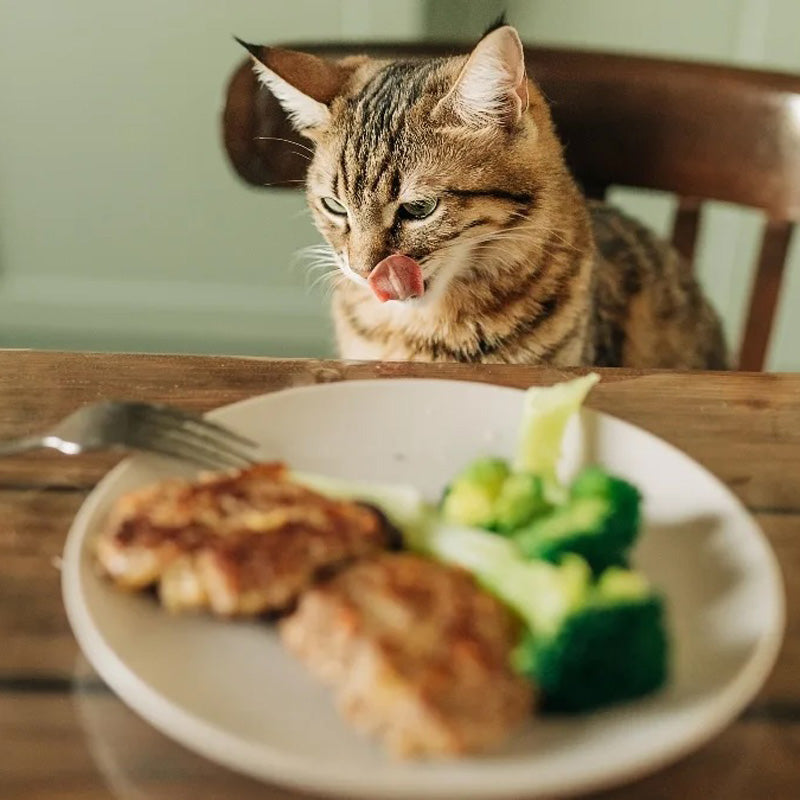
There is a certain kind of panic that happens when your cat stares at your dinner like they have paid rent, contributed to groceries, and deserve a portion.
As cat owners, we get it. Cats are curious. Some are polite sniffers. Some are tiny food inspectors. Some will attempt a full crime scene investigation the moment you open a can of tuna.
 Still Life with Cats by Desportes, 1705 (left), Still Life of The Remnants of a Meal with a Lunging Cat, Alexandre-François Desportes, 18th century (right)
Cats have been stealing, sniffing, inspecting, and silently judging human food since the beginning of time. Honestly, we have historical evidence. In old still-life paintings from the 17th and 18th centuries, cats were often caught mid-crime: pawing at fish, stealing sausages, lurking beside table spreads, or looking suspiciously innocent next to someone’s dinner. Some things truly never change.

Fast forward to today, and the setting may be less Renaissance banquet and more modern dining table, but the cat behaviour remains the same. You turn away for two seconds, and suddenly there is a paw near your chicken, a nose in your bowl, or a tiny food critic questioning your life choices.
So, if your cat has ever tried to steal a bite from your plate, you are not alone. Cats have been doing this for centuries. The real question is not whether they want your food. It is whether that human food is actually safe for them to eat.
But before you share a bite from your plate, it is important to know this: some human foods are safe for cats in small amounts, but not all human food is cat-safe. Cats are obligate carnivores, which means their bodies are built to get most of their nutrition from animal-based protein. Human food should only be treated as an occasional snack, not a replacement for a complete and balanced cat diet.
So, what human food can cats actually eat?
Here is a simple, cat-parent-friendly guide.
Can Cats Eat Human Food?
Yes, cats can eat some human foods, but only when they are plain, cooked, unseasoned, and served in small amounts.
The safest way to think about it is this:
Cat-safe human food should be simple, clean, and boring.
No salt.
No garlic.
No onion.
No sauces.
No seasoning.
No butter.
No chilli.
No “just a little bit of gravy”.
Basically, if your cat could write a recipe, it would probably be: “boil chicken, serve dramatically.”
Human food should also make up only a very small part of your cat’s overall diet. Their main meals should still come from complete and balanced cat food that provides the nutrients they need, including taurine, animal protein, vitamins, minerals, and moisture.
If your cat has kidney disease, diabetes, food allergies, urinary issues, pancreatitis, digestive sensitivity, or is on a prescription diet, always check with your vet before introducing new foods.
Safe Human Foods Cats Can Eat
Below are some human foods that are generally considered safe for cats when served plain, cooked where needed, and in small portions.
1. Cooked Chicken

Plain cooked chicken is one of the safest human foods to offer cats as an occasional treat.
Choose skinless chicken with no seasoning, oil, garlic, onion, sauce, or bones. Boiled, steamed, or baked chicken is best. Shred it into small pieces so it is easier for your cat to chew.
Chicken can be a good high-protein treat, especially for cats who love meaty textures. Just remember that it should be served as a treat, not as a full meal replacement, because plain chicken alone is not nutritionally complete for cats.
Best served: plain, cooked, boneless, skinless, shredded.
For everyday meals, explore our ready-to-serve cat food options, thoughtfully selected for fuss-free feeding. You can also browse our cat treats collection for safer snack ideas, or complete your cat’s dining setup with bowls and feeders designed for comfortable, everyday use.
2. Cooked Turkey

Plain cooked turkey is another cat-safe option when prepared simply.
As with chicken, remove the skin, bones, and any seasoning. Avoid deli turkey, smoked turkey, turkey ham, or processed slices because these are usually high in sodium and may contain preservatives or flavourings that are not suitable for cats.
A tiny piece of plain turkey can be a nice treat, especially during festive meals when your cat is already sitting nearby looking personally betrayed.
Best served: plain, cooked, boneless, skinless, in small pieces.
3. Cooked Fish

Many cats love fish, and plain cooked fish can be safe in small amounts.
Salmon, tuna, cod, or white fish can be offered occasionally, as long as they are fully cooked, deboned, and unseasoned. Avoid raw fish, fish with sauces, salted fish, spicy fish, and fish cooked with garlic or onion.
Canned tuna in water may be tempting, but it should not become a daily habit. Tuna made for humans is not nutritionally balanced for cats, and frequent feeding may encourage picky eating or contribute to nutritional imbalance over time.
Best served: plain, cooked, boneless, no salt, no oil, no sauce.
A little fish is fine. A cat who believes every meal must now be tuna omakase is less fine.
4. Cooked Egg

Cats can eat cooked egg in small amounts.
Eggs are a source of protein, but they should always be fully cooked before serving. Avoid raw egg because it may carry bacteria and can interfere with nutrient absorption when fed regularly.
Scrambled egg can be offered only if it is cooked without butter, oil, milk, salt, or seasoning. A small piece of boiled egg is usually the safest option.
Best served: fully cooked, plain, tiny portion.
5. Pumpkin

Plain cooked pumpkin can be safe for cats and is often used by pet owners as a fibre-rich addition.
The important word here is plain. Use cooked pumpkin or plain canned pumpkin with no sugar, spices, salt, or additives. Do not use pumpkin pie filling, as it may contain sugar, spices, and ingredients that are not suitable for cats.
Pumpkin may be helpful for some cats with mild digestive irregularity, but it is not a cure-all. If your cat has ongoing diarrhoea, constipation, vomiting, appetite loss, or changes in litter box habits, it is best to check with your vet.
Best served: plain cooked pumpkin, very small amount.
For cats who need a little extra tummy support, explore our cat digestive support collection. You can also browse our cat food toppers collection for easy ways to add variety, flavour, and mealtime excitement to your cat’s bowl.
6. Carrots

Cats can eat carrots, but they should be cooked and chopped into small pieces.
Carrots are not necessary in a cat’s diet, but a tiny amount of plain cooked carrot can be safe. Avoid raw chunks, as they can be hard to chew and may be a choking risk.
Most cats are not naturally excited about carrots, because cats are cats and not tiny rabbits. But if your cat is curious, a small soft piece is generally okay.
Best served: cooked, plain, soft, chopped small.
7. Green Beans

Plain green beans can be safe for cats in small amounts.
They should be cooked, chopped, and served without salt, butter, garlic, onion, or sauces. Green beans are low in calories, but they should still be given sparingly because cats do not need large amounts of vegetables.
Best served: cooked, plain, chopped.
8. Broccoli

Cats can eat small amounts of plain cooked broccoli.
Serve it soft and chopped into tiny pieces. Like other vegetables, broccoli should only be an occasional extra. Some cats may tolerate it well, while others may get gas or digestive upset.
If your cat tries broccoli once and walks away like you have personally offended them, that is also a valid review.
Best served: cooked, plain, tiny portion.
9. Plain Rice

Cats can eat a small amount of plain cooked rice, but it should not be a regular part of their diet.
Rice does not provide the animal-based nutrition cats need, but a little plain rice may sometimes be used in bland diets under veterinary guidance. If your cat has an upset stomach, it is better to speak to your vet instead of trying to manage symptoms at home for too long.
Best served: plain, fully cooked, very small amount.
10. Small Amounts of Certain Fruits

Some cats may safely eat tiny amounts of certain fruits, such as apple flesh or banana.
However, fruit is not essential for cats, and many cats will not be interested. If offering apple, remove the seeds, stem, and core. Serve only a very small piece.
Avoid grapes and raisins as a precaution. Kidney toxicity is well documented in dogs; evidence in cats is more limited, so they are not suitable treats.
Best served: tiny amount, no seeds, no skin if tough, occasional only.
Quick List: Human Food Cats Can Eat
Here is a simple cat-safe human food list:
- Plain cooked chicken
- Plain cooked turkey
- Plain cooked fish
- Fully cooked egg
- Plain cooked pumpkin
- Cooked carrot
- Cooked green beans
- Cooked broccoli
- Plain cooked rice
- Tiny amounts of apple flesh or banana
The golden rule: plain, cooked, unseasoned, and small.
Foods to Keep Away From Cats

Some foods are established feline toxins; others are avoided because of infection, choking, digestive or nutritional risks. These are different reasons for keeping food off your cat’s menu.
Avoid giving your cat:
- Onion
- Garlic
- Chives
- Leeks
- Grapes
- Raisins
- Chocolate
- Coffee
- Tea
- Caffeine
- Alcohol
- Sugar-free foods and sweetened snacks (unnecessary extras; ingredients vary)
- Raw dough
- Cooked bones
- Raw fish
- Raw egg
- Salty processed meats
- Spicy food
- Fried food
- Milk and dairy if your cat is lactose intolerant
A common mistake is assuming that a tiny bit of seasoning is harmless. But many cooked human dishes contain onion, garlic, salt, sauces, butter, or spices. That means the chicken from your plate may not be the same as plain chicken prepared safely for your cat.
When in doubt, do not share it.
Can Cats Drink Milk?
Despite the classic image of a cat happily drinking a saucer of milk, many cats do not digest milk well.
Some cats are lactose intolerant, which means milk can cause diarrhoea, gas, or stomach discomfort. If you want to give your cat a creamy treat, look for cat-specific milk instead, and even then, offer it only occasionally.
For daily hydration, fresh water is still the best choice.
How Much Human Food Can I Give My Cat?

Human food should be treated as a small treat, not part of your cat’s main diet.
A good starting point is a bite-sized amount. For most cats, that may mean:
- A small shred of cooked chicken
- A teaspoon of plain cooked pumpkin
- A tiny piece of cooked egg
- A small flake of cooked fish
Introduce one new food at a time and observe your cat. If you notice vomiting, diarrhoea, itchiness, appetite changes, or unusual behaviour, stop feeding that food and check with your vet.
Also, be mindful of your cat’s weight. Indoor cats, especially in Singapore apartments, may have lower activity levels and can gain weight more easily. Even “healthy” treats can add up if given too often.
What Is the Best Human Food for Cats?

If we had to choose the safest and most cat-appropriate human food, it would usually be plain cooked meat.
Cats are obligate carnivores, so animal-based protein is more suitable than fruits, vegetables, or grains. Plain cooked chicken, turkey, or fish is usually a better treat choice than rice, fruit, or vegetables.
That said, even plain meat should not replace a complete cat food diet. Cats need a precise balance of nutrients, including taurine, calcium, phosphorus, vitamins, and essential fatty acids. A bowl of plain chicken may look wholesome, but it is not complete nutrition.
Think of human food as a tiny side quest, not the main storyline.
Safe Feeding Tips Before Sharing Human Food With Your Cat

Before offering your cat any human food, follow these safety rules:
-
Keep it plain
No seasoning, salt, garlic, onion, sauces, butter, oil, or spices. -
Cook it properly
Avoid raw meat, raw fish, and raw eggs. -
Remove bones and skin
Bones can splinter or become a choking hazard. Fatty skin may upset your cat’s stomach. -
Serve small pieces
Cats can choke on large chunks, especially if they are excited. -
Introduce slowly
Try one new food at a time so you can spot any reaction. -
Do not replace proper cat food
Human food is not complete and balanced for cats. -
Check with your vet for medical cats
This is especially important for cats with kidney disease, urinary issues, diabetes, pancreatitis, allergies, or sensitive stomachs.
FAQ: Human Food That Is Safe for Cats

What human food is safest for cats?
Plain cooked chicken, turkey, fish, and fully cooked egg are some of the safer human foods for cats when served in small amounts. They should be unseasoned, boneless, and free from sauces or oils.
Can cats eat rice?
Cats can eat a small amount of plain cooked rice, but rice is not necessary for them. Cats need animal-based protein, so rice should only be an occasional small addition, not a regular food.
Can cats eat tuna?
Cats can eat small amounts of plain cooked tuna or tuna in water occasionally. However, tuna made for humans should not be fed daily because it is not nutritionally balanced for cats.
Can cats eat chicken every day?
Cats can eat chicken, but plain chicken alone should not be their daily complete diet. It lacks the full nutrient balance cats need. Use cooked chicken as a treat or topper, not a replacement for complete cat food.
Can cats eat vegetables?
Some cats can eat small amounts of plain cooked vegetables such as carrot, green beans, broccoli, or pumpkin. However, vegetables are not essential for cats and should only be given occasionally.
What human food is toxic to cats?
Onion, garlic and chives, chocolate, caffeine and alcohol are toxic hazards for cats. Bones, raw foods and heavily seasoned meals carry other risks. Avoid grapes and raisins as a precaution; dog-specific toxicity evidence should not be presented as proof of the same effect in cats. Xylitol is a well-established dog toxin, but the same toxicity is not established in cats. If your cat eats an unfamiliar product, ask your vet to assess all its ingredients.
Can kittens eat human food?
Kittens have sensitive digestive systems and very specific nutritional needs. It is best to feed them complete kitten food and check with your vet before offering human food.
What should I do if my cat eats something unsafe?
Contact your vet as soon as possible. If you know what your cat ate, how much they ate, and when they ate it, share that information with the vet. Do not wait for symptoms if the food is known to be toxic.
Final Thoughts: A Little Treat Is Fine, But Keep It Cat-Safe
Sharing food with your cat can feel sweet, especially when they are staring at you with those “I have never eaten in my life” eyes.
But the safest treats are the simplest ones. Plain cooked chicken, turkey, fish, egg, or a small spoon of plain pumpkin can be okay for many cats. What matters most is avoiding seasoning, toxic ingredients, and overfeeding.
Your cat does not need fancy human food to feel loved. Sometimes, the best kind of care is a balanced diet, fresh water, safe treats, and a human who knows that garlic butter chicken is, unfortunately, not a cat snack.
For everyday feeding, choose a complete and balanced cat food appropriate to your cat’s life stage. Cooked wet and dry foods are alternatives to raw products. Freeze-dried raw food can still carry pathogens; shelf stability and adding water do not make it sterile.
For safer everyday options, explore our cat-friendly picks:
[Shop cat food]
[Shop cat treats]
[Shop cat bowls and feeders]
[Shop cat digestive support]
[Shop cat enrichment toys]
Raw pet food can expose pets and people to harmful bacteria. Read the FDA’s raw-food safety guidance before choosing a raw diet, and ask your vet about your pet and household’s risks.
Food-risk references: ASPCA Poison Control and ASPCA’s species-specific xylitol guidance. If poisoning is suspected, contact your local vet promptly rather than waiting for symptoms.
Related CreatureLand guides
Continue with choosing a wet-food texture, checking your cat’s body condition.

Written by Creatureland store



Leave a comment
This site is protected by hCaptcha and the hCaptcha Privacy Policy and Terms of Service apply.