
Measure the Portion
Use the feeding chart for the exact brand and recipe, based on your pet’s weight, age and activity.

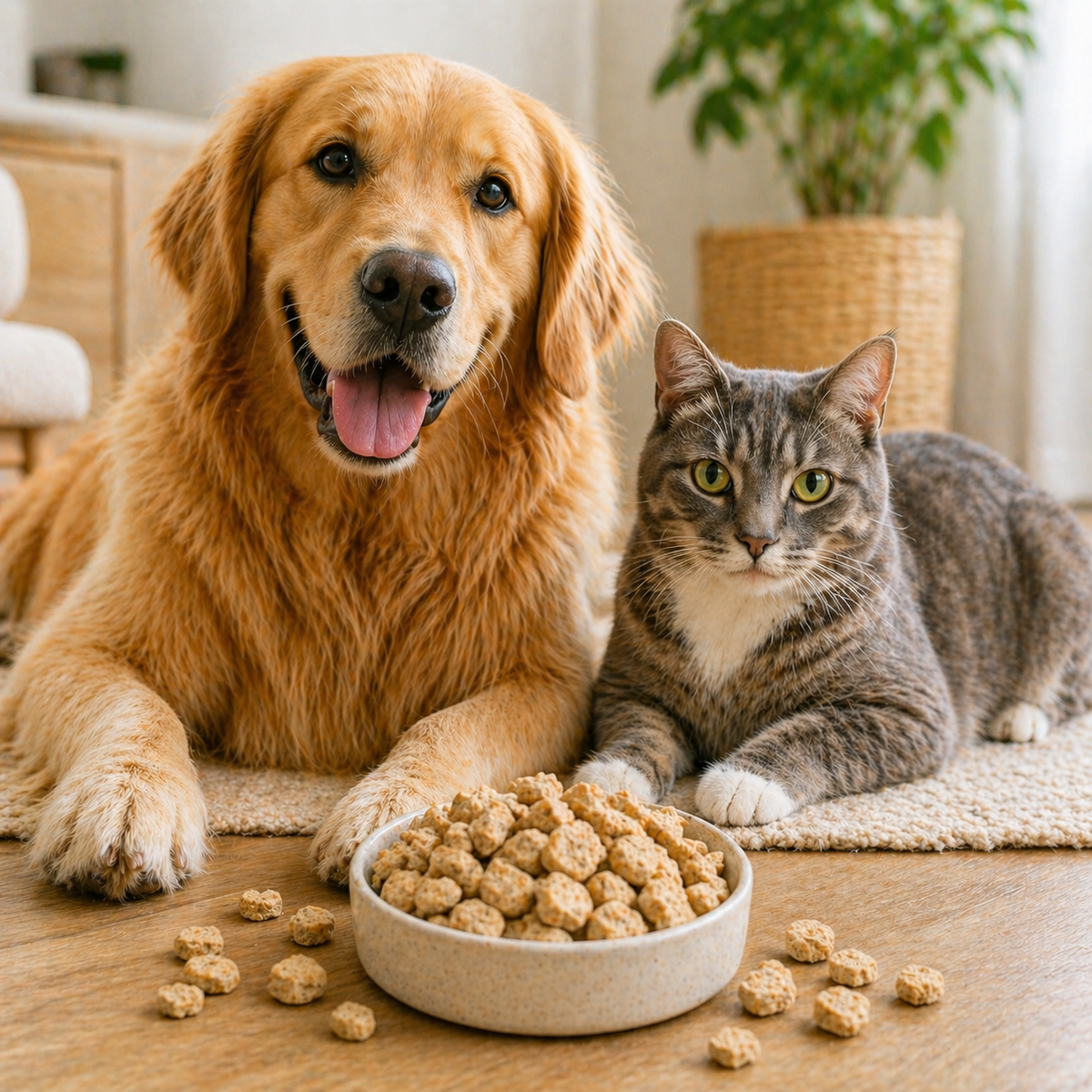
Learn how to prepare, rehydrate and portion freeze-dried raw dog and cat food, introduce it gradually and avoid common feeding mistakes.
Feeding portions differ between brands, recipes and product types. Always use the feeding guide printed on the individual product packaging as your primary reference.
Puppies, kittens, pregnant or nursing pets, seniors and pets with medical conditions may have different nutritional needs. Consult your veterinarian when health concerns are involved or when a therapeutic diet is required.
CreatureLand carries a curated range of complete meals, mixers, toppers and treats for dogs and cats, with convenient local delivery and collection in Singapore.
Use the feeding chart for the exact brand and recipe, based on your pet’s weight, age and activity.
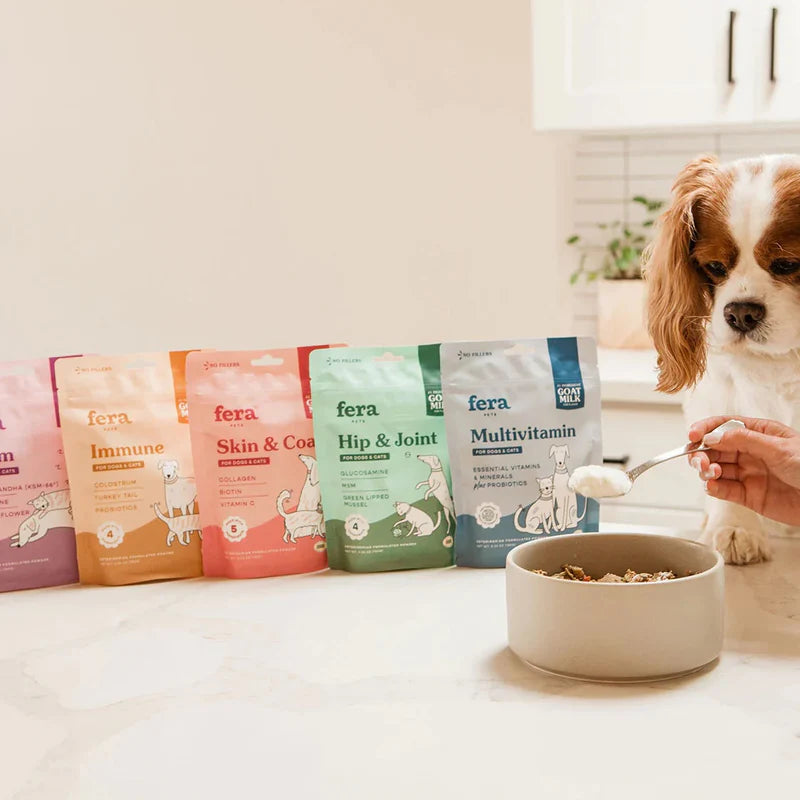
Add the quantity of warm or room-temperature water recommended on the packaging.
Let the food absorb the water for approximately 3–5 minutes, or for the time stated by the manufacturer.
Stir the meal, check the texture and serve it promptly in a clean feeding bowl.
Use these quick links to move directly to the feeding information you need.

Freeze-dried raw pet food is made by freezing ingredients and removing most of their moisture under low temperatures and reduced pressure. This creates a lightweight, shelf-stable product without requiring frozen storage before opening.
Freeze-dried food may be sold as a nutritionally complete meal, a meal mixer, a topper or a treat. These products can look similar, so shoppers should always read the nutritional adequacy statement rather than assuming every freeze-dried recipe can replace a full meal.
Common formats include small morsels, nuggets, patties, bite-sized pieces, powdered toppers and single-ingredient treats.
Freeze-dried dog and cat food is available in several shapes and sizes. The format can affect how easily the food is portioned, crumbled, rehydrated or used as a complete meal, topper or treat.
Product shape does not determine whether the food is complete and balanced. Always check the packaging for its intended feeding purpose, preparation directions and recommended serving amount.

Patties are larger, flat portions that can be served whole or broken into smaller pieces. They are commonly crumbled before water is added to help them rehydrate more evenly.

Morsels are small, bite-sized pieces that are easy to measure and divide between meals. They may be served dry or rehydrated according to the manufacturer’s directions.

Nuggets are compact pieces that can be counted, weighed or broken apart. Their size and density vary between brands, so soaking times and feeding amounts may differ.

Pellets are smaller, compact pieces that can be convenient for portioning, mixing with another food or serving to smaller pets. Follow the product directions when adding water.

Cubes are evenly shaped pieces that may be used as meals, toppers or treats depending on the formula. Larger cubes can be broken apart before serving or rehydrating.

Bites and chunks are irregular or sliced pieces that may be suitable for feeding dry, adding to meals or rehydrating. Their intended use depends on the individual product.

Powders and crumbles are usually easy to sprinkle over wet food or kibble. They are often used as meal toppers, although the nutritional role should always be confirmed on the label.

Whole pieces of meat, fish or organs are commonly sold as treats or supplemental toppers. They should not replace a complete meal unless the packaging specifically states otherwise.
Yes, the number of patties, nuggets or morsels required can vary because different shapes and recipes have different weights and calorie densities. Measure the food using the serving method stated on the packaging rather than comparing pieces by appearance alone.
The precise preparation method varies by product, but most freeze-dried raw feeding routines follow four simple steps.
Measure the food while it is dry. A kitchen scale is often more accurate than a cup when the feeding guide is listed in grams.
Add warm or room-temperature water according to the ratio stated on the packaging.
Allow the pieces to soften for approximately 3–5 minutes, or longer when the manufacturer recommends it.
Stir thoroughly, break apart any firm pieces and serve the prepared meal promptly.
Warm water can enhance the food’s aroma and create a softer texture. Avoid boiling water unless the manufacturer specifically recommends it. You may adjust the final texture according to your pet’s preference while staying within the product’s preparation directions.
There is no universal amount that applies to every freeze-dried raw dog or cat food. Two recipes with the same weight may provide different calories, and a complete meal requires a different approach from a topper or treat.
There is no reliable gram allowance based on body weight alone; recipes differ in calorie density. Use the manufacturer’s current chart for the exact recipe.
Use the exact recipe label: find the feeding amount for your pet’s life stage and target body condition, measure the dry portion as instructed, and account for other food and treats. Ask your vet to set the calorie allowance if your pet needs weight management or has a medical condition.
There is no reliable gram allowance based on body weight alone; recipes differ in calorie density. Use the manufacturer’s current chart for the exact recipe.
Use the exact recipe label: find the feeding amount for your pet’s life stage and target body condition, measure the dry portion as instructed, and account for other food and treats. Ask your vet to set the calorie allowance if your pet needs weight management or has a medical condition.
A gradual transition gives your dog’s or cat’s digestive system time to adjust to a different recipe, texture and calorie density.

Feed approximately 25% new food and 75% existing food.
Feed approximately 50% new food and 50% existing food.
Feed approximately 75% new food and 25% existing food.
Move to 100% new food when your pet is tolerating it well.
The seven-day schedule is a general example. Sensitive pets may need a longer transition, while the manufacturer may recommend a different timetable.
Some freeze-dried foods may be served dry, while others are intended to be rehydrated. The best method depends on the product instructions and your pet’s needs and preferences.
Freeze-dried products can serve very different nutritional purposes. Confirm the product type before deciding how much to feed or whether it can replace an existing meal.
Formulated to provide complete nutrition for the species and life stage listed on the packaging.
Can it replace a meal? Yes, when fed according to the manufacturer’s directions.
Intended to be mixed with another diet to add flavour, ingredients or variety.
Can it replace a meal? Not unless the label specifically states that it is complete and balanced.
Crumbled, sprinkled or mixed over an existing complete meal in a controlled portion.
Can it replace a meal? Generally no. Check the nutritional adequacy statement.
Intended for training, rewards or occasional supplemental feeding.
Can it replace a meal? No, unless unusually labelled as a complete diet.
Toppers, mixers and treats may look similar to complete food but may not provide balanced daily nutrition.
Recipes differ in calorie density, so one universal gram amount cannot be applied to every product.
A sudden dietary change may lead to food refusal or digestive changes. Transition gradually when possible.
Freeze-dried pieces can look small while providing substantial calories. Measure portions carefully.
Use warm or room-temperature water unless the manufacturer gives different instructions.
Once water is added, treat the food like a fresh meal and follow the brand’s directions for leftovers.
Air and moisture can affect product quality. Reseal the original package firmly after every use.
Introducing multiple proteins, supplements or toppers together makes it harder to identify what caused a reaction.
Include all extras when assessing your pet’s total daily food and calorie intake.
Freeze-dried food may suit particular feeding routines and preferences, but the format is not automatically appropriate for every pet.
Useful for owners who want an alternative to frozen raw food without requiring freezer space for every meal.
Some picky pets enjoy the meat-rich aroma, texture and ability to serve the food dry or rehydrated.
Freeze-dried pieces can be crumbled over wet food or kibble when the product is intended for supplemental feeding.
The lightweight, shelf-stable format can be practical when frozen food storage is difficult.
It may suit owners transitioning from kibble towards a different, meat-focused meal format.
Rehydration can create a softer consistency for pets that prefer or manage moist textures more easily.
Both formats can be complete and balanced when properly formulated. The best choice depends on the individual pet, product quality, household budget and feeding routine.
| Feature | Freeze-Dried Raw Food | Kibble |
|---|---|---|
| Processing method | Generally uses low-temperature moisture removal. | Typically cooked and extruded into dry pieces. |
| Moisture | Very low when dry; water may be added before serving. | Low moisture and generally served dry. |
| Storage | Shelf-stable before opening when stored as directed. | Shelf-stable when stored as directed. |
| Preparation | May require measuring, adding water and waiting to soften. | Usually measured and served directly. |
| Calorie density | Can be highly calorie-dense; varies considerably by recipe. | Varies by recipe and formulation. |
| Ingredient format | Often features visible meat, organ or produce-based pieces. | Ingredients are blended and formed into uniform pieces. |
| Convenience | Lightweight, though some recipes require rehydration. | Quick to portion and serve. |
| Cost | Usually costs more per meal. | Usually more economical per meal. |
| Travel suitability | Lightweight and useful when frozen storage is unavailable. | Highly convenient for transport and storage. |
Compare the complete formulation, calorie content, feeding instructions and suitability for your pet rather than choosing based on format alone.
Back to Quick LinksCreatureLand carries freeze-dried raw dog food, freeze-dried raw cat food and complementary toppers from a range of established brands. Always check each product’s species, life-stage and feeding designation.
Freeze-dried raw recipes and feeding formats for pet owners looking for convenient, meat-focused meal options.
Freeze-dried recipes and whole-food toppers intended for different feeding roles depending on the individual product.
Freeze-dried raw dog food recipes designed as convenient feeding options, with suitability depending on the individual formula.
Freeze-dried raw cat food recipes created for feline feeding, with several proteins and bag sizes available.
New Zealand-made freeze-dried dog food and treats, with nutritional roles that vary across the range.
Freeze-dried cat food, wet food and treats formulated specifically for feline feeding requirements.
Freeze-dried meals, meal mixers and treats for different feeding occasions and species.
Raw-food safety: freeze-dried raw food can contain harmful bacteria, including Salmonella. Freeze-drying and rehydrating are not a guarantee of pathogen removal. The FDA warns of infection risks to pets and people. Consider a cooked complete diet and discuss raw feeding with your vet, especially where a pet or household member is vulnerable to infection.
Practical HandlingMany freeze-dried raw products contain uncooked animal ingredients. Freeze-drying removes moisture, but careful storage and hygiene remain important.
Do not feed a product that smells unusual, has become damp inside the bag, shows visible mould, has compromised packaging or displays other signs of spoilage.
Many small morsels soften in approximately 3–5 minutes, while larger patties may need longer. Follow the soaking time stated on the individual product packaging.
Some products may be served dry when the manufacturer permits it. Keep fresh drinking water available and remember that the pieces remain calorie-dense even when they look small.
No. Freeze-dried products may be complete meals, meal mixers, toppers or treats. Check the nutritional adequacy statement before using one as your pet’s primary diet.
Start with the feeding guide for the exact brand and recipe. The amount depends on calorie density, body weight, age, activity, body condition and whether the food is a complete meal or topper.
Yes, when the product is suitable for supplemental feeding. Account for the extra calories and keep the main diet nutritionally complete and balanced.
Do not assume dog and cat foods are interchangeable as complete diets. Choose a product formulated for the correct species and life stage. Some treats may be suitable for both species when the label confirms this.
The dry product is generally shelf-stable when stored according to the packaging. Once water has been added, handle it like fresh food and follow the manufacturer’s directions for refrigeration or disposal.
Keep it in its original package, reseal it firmly and store it away from heat, sunlight and moisture. Use dry hands or a clean, dry scoop.
Serve rehydrated food promptly and follow the manufacturer’s directions for leftovers. Avoid leaving it at room temperature for prolonged periods, especially in Singapore’s warm climate.
It may be mixed with kibble when the product instructions permit it. If both foods are complete diets, use proportional portions rather than feeding the full recommended amount of both.
Choose a complete product labelled for growth or all life stages. Puppies and kittens have different nutritional and feeding needs from adults, so follow the product guide and seek veterinary advice when needed.
Slow the transition, return to the previously tolerated ratio and avoid introducing additional new foods. Contact your veterinarian if the loose stools are persistent, severe or accompanied by other signs of illness.
Choose according to your pet’s species, life stage and preferred feeding format, and confirm whether the product is a complete food, meal mixer, topper or treat.
Check whether the freeze-dried food is a complete meal, mixer, topper or treat, then follow the preparation and feeding instructions on its packaging.
Rehydrate when appropriate, introduce the new food gradually and monitor your pet’s appetite, stool quality, body condition and overall response. Seek veterinary advice whenever medical concerns or therapeutic dietary needs are involved.
Continue with cat treat safety, cooked wet-food texture options.

Written by Creatureland store

Does Your Dog Really Need Shoes? A Singapore Guide to Paw Protection
From hot pavements to rain-soaked grass, Singapore walks can be tough on paws. Discover when your dog may benefit from shoes, compare Ruffwear footwear, and build a simple before-and-after routine ...
Read more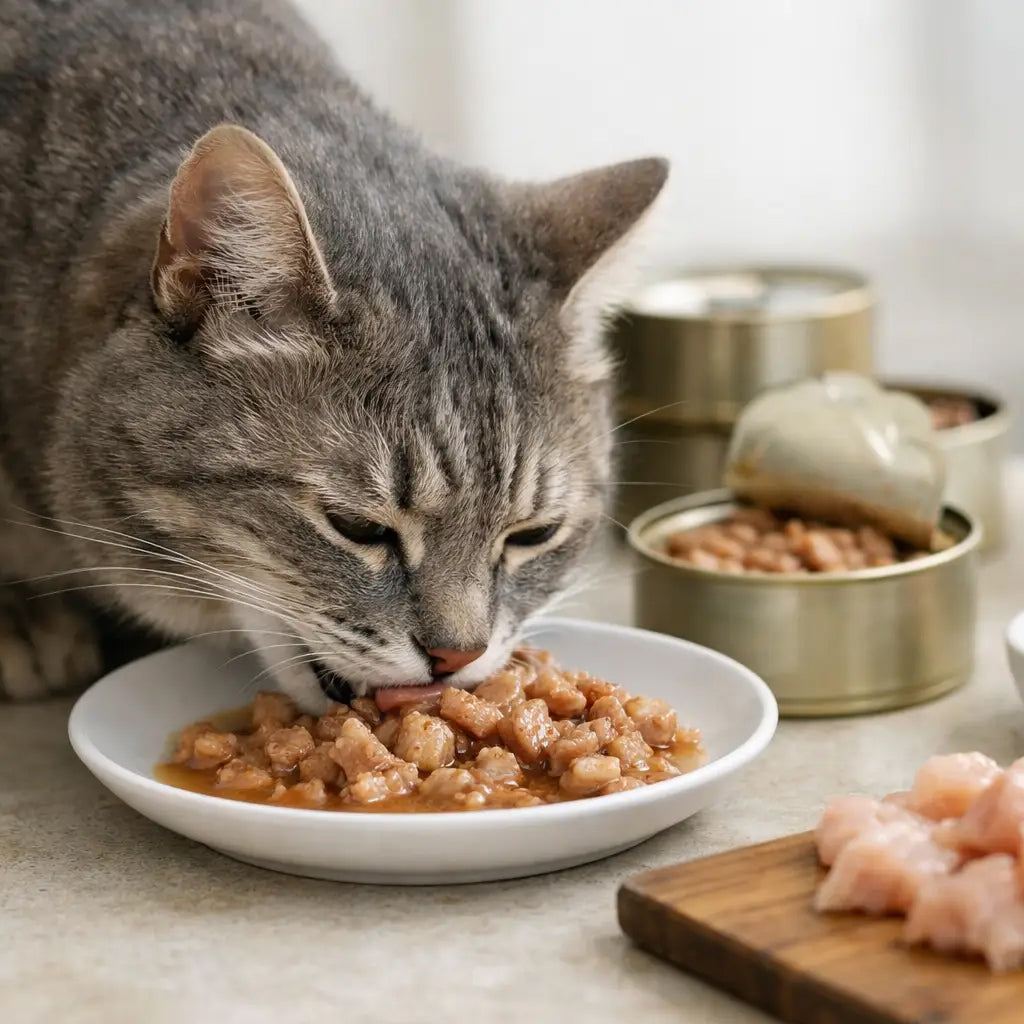
Picky Cat? Cat Wet Food Textures Could Be the Reason
Does your cat lick the gravy but leave the food? Texture could be the reason. Explore seven cat wet food textures, learn their differences, and find options that suit the way your cat likes to eat.
Read more
Buying Ruffwear in Singapore: Harnesses, leashes and sizing
Find your next Ruffwear harness, leash or walking accessory at CreatureLand Singapore. Compare harness designs, browse colours and explore our fitting guides.
Read more
Leave a comment
This site is protected by hCaptcha and the hCaptcha Privacy Policy and Terms of Service apply.