


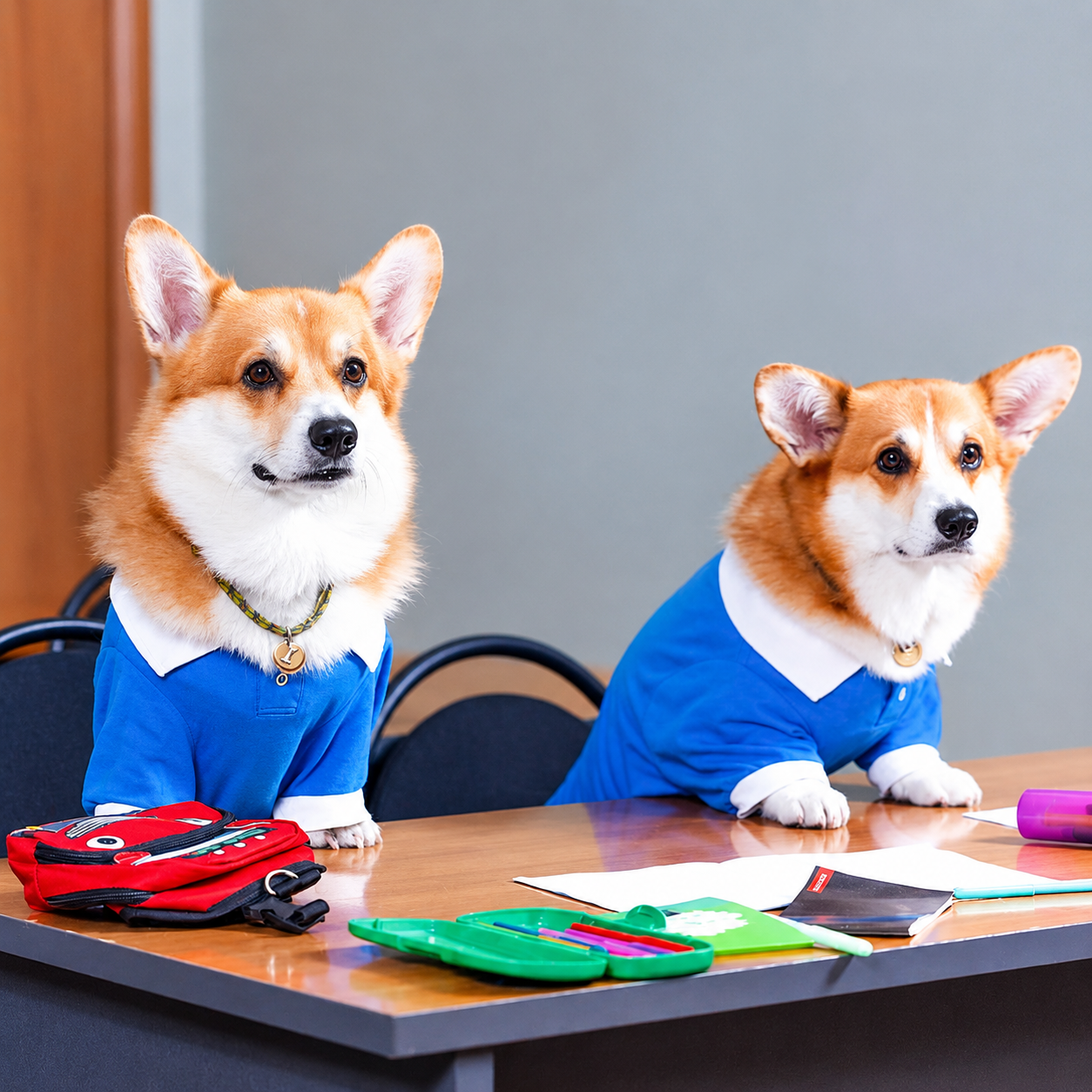
Feeling Overwhelmed by Your Dog? Here’s When Dog School May Be Worth It
Wondering if dog school is right for your dog? Here’s how to tell when training classes may help and when home practice might be enough.
 @photo credit: Happy Tails
Many dog owners ask the same question at some point: “Do I need to send my dog to dog school?”
The honest answer is: not every dog needs formal dog school, but almost every dog benefits from some kind of structured training. For some dogs, that structure can happen at home with a consistent owner. For others, dog school or professional dog training classes can make life easier, safer, and less stressful for both the dog and the family.
Dog school is not just for “bad dogs.” It is for puppies learning manners, rescue dogs building confidence, energetic dogs learning self-control, and owners who want better communication with their pets.
This guide will help you understand when dog school is worth it, when home training may be enough, and how to choose the right path for your dog.
Before you book a class
Ask each school for a written quote covering the number and length of sessions, group size, training methods, trainer qualifications, owner participation, make-up policy and any assessment or equipment fees. Confirm whether the quoted programme suits your dog’s age and behaviour. For fear, aggression or suspected pain, ask your vet which kind of professional support is appropriate.
Dog School in Singapore: Why Local Owners Often Consider It
 @photo credit: PetMD
For dog owners in Singapore, training can feel especially important because many dogs live close to neighbours, shared corridors, lifts, void decks, parks, and busy roads. A dog that barks at every sound, pulls toward other dogs, or panics in lifts can quickly become stressful for both the owner and the people around them.
That does not mean every Singapore dog must attend dog school. But if you live in an HDB flat, condominium, or a neighbourhood with many dogs and children, structured dog training can make daily life calmer and safer.
In Singapore, dog school may be especially helpful if your dog:
-
Barks at corridor sounds, neighbours, or delivery riders
-
Pulls strongly during walks in crowded areas
-
Reacts to dogs in lifts, parks, or narrow pathways
-
Struggles with recall in dog runs
-
Jumps on guests or strangers
-
Gets anxious around traffic, bicycles, scooters, or children
-
Needs puppy socialisation in a controlled setting
Before choosing a trainer, check whether their methods match your dog’s temperament. Singapore’s Animal & Veterinary Service advises that qualified trainers using positive reinforcement can help with puppy training, basic obedience, and minor behavioural issues, while serious behaviour problems may need a behaviourist rather than a standard trainer.
Dog Schools and Dog Trainers in Singapore to Explore
Below are Singapore-based dog training options that owners can research. This is not a ranking. Always contact the school directly, ask about training methods, class format, trainer credentials, vaccination requirements, and whether the class is suitable for your dog’s behaviour.
1. Waggie Dog Training School

Best for: Owners looking for an established Singapore dog training provider with group and private options.
Website: Waggie Dog Training School
Private training page: Waggie private dog training
Waggie offers dog training services in Singapore, including private lessons for puppies and adult dogs. Their private training page explains that lessons can be personalised to your dog’s needs and may help with challenges such as home behaviour, obedience, and owner-specific goals.
2. Pawsitive Furkids

Best for: Owners looking for low-stress, positive reinforcement dog training.
Website: Pawsitive Furkids
Pawsitive Furkids describes its approach as positive reinforcement and highlights low-stress handling and AVS-accredited certified dog training credentials. This may appeal to owners who want a gentler, relationship-focused training approach.
3. Wigglebutts Academy

Best for: Puppy life skills, manners, enrichment, and force-free group classes.
Website: Wigglebutts Academy group classes
Wigglebutts Academy offers dog training group classes in Singapore, including puppy life skills, everyday manners, confidence-building, enrichment, and advanced learning options. Their page describes their classes as positive and force-free.
4. Pet Coach SG

Best for: Owners exploring structured day training and foundation skills.
Website: Pet Coach SG
Pet Coach SG describes dog training school packages in Singapore that run over multiple sessions to build foundational skills and transfer those skills to owners, so training can continue at home.
5. AVS-Accredited Certified Dog Trainers List
Best for: Owners who want to check recognised dog trainer accreditation in Singapore.
Website: AVS list of accredited certified dog trainers
The AVS maintains a list of AVS-Accredited Certified Dog Trainers in Singapore. This can be a useful starting point when checking trainer credentials.
What Is Dog School?
Dog school is a structured training environment where dogs learn important life skills under the guidance of a professional trainer. Depending on the programme, dog school may include:
-
Basic obedience training
-
Puppy socialisation
-
Leash walking
-
Recall training
-
Calm behaviour around people and dogs
-
Confidence building
-
Behaviour support for barking, jumping, chewing, or reactivity
Some dog schools offer group classes, while others provide private lessons. Some focus on puppies, while others work with adult dogs or dogs with specific behavioural concerns.
The goal of dog school is not to turn your dog into a robot. The goal is to help your dog understand what is expected and help you become a clearer, more confident owner.
Signs Your Dog May Benefit From Dog School
 @photo credit: K9 Training Institute
You may want to consider dog school if your dog shows any of the following signs:
1. Your Dog Does Not Listen to Basic Commands
If your dog struggles with simple cues like “sit,” “stay,” “come,” or “leave it,” dog school can provide a foundation. These commands are not just tricks. They help keep your dog safe in everyday situations.
For example, a reliable recall can stop your dog from running into traffic. A strong “leave it” can prevent your dog from eating something dangerous.
2. Walks Are Stressful
Walks should be enjoyable, not a daily battle. Dog school may help if your dog:
-
Pulls constantly on the leash
-
Lunges at other dogs
-
Barks at people, bicycles, or cars
-
Refuses to walk calmly beside you
-
Becomes overly excited outdoors
Leash problems are one of the most common reasons owners look for dog training classes.
3. Your Puppy Needs Socialisation
Puppy school can be especially valuable during the early months of a dog’s life. A good puppy school helps young dogs experience new people, sounds, surfaces, and other puppies in a controlled way.
Proper socialisation can reduce fear, anxiety, and overreaction later in life.
However, puppy school is not just puppy playtime. A quality programme should also teach calmness, handling, basic manners, and owner education.
4. Your Dog Jumps on People
Jumping may seem harmless when your dog is small, but it can become a problem quickly. A dog that jumps on children, elderly people, or visitors can cause injuries or make guests uncomfortable.
Dog school can teach your dog polite greetings and help you reward calm behaviour instead of excitement.
5. Your Dog Barks Too Much
Barking is normal dog behaviour, but excessive barking can become stressful. Dogs may bark because they are bored, anxious, territorial, excited, or unsure.
A professional trainer can help identify why your dog is barking and teach you how to manage the cause, not just the noise.
6. Your Dog Is Fearful or Reactive
If your dog growls, lunges, hides, freezes, or panics around people, dogs, or new places, dog school may help — but choosing the right kind of training is very important.
Reactive or fearful dogs often need private behaviour training rather than a busy group class. The wrong environment can make fear worse.
7. You Feel Overwhelmed
Sometimes the issue is not that the dog is “difficult.” It is that the owner does not know what to do next.
Dog school can give you a plan, feedback, and reassurance. Many owners feel relieved once they understand how to communicate with their dog more clearly.
When Home Training May Be Enough
 @photo credit: getty images
Dog school is helpful, but it is not always necessary. Home training may be enough if your dog:
-
Is calm and manageable in most situations
-
Responds well to basic commands
-
Walks reasonably well on a leash
-
Is friendly and relaxed around people and dogs
-
Does not show signs of fear, aggression, or severe anxiety
-
Has an owner who can train consistently every day
Many dogs learn beautifully at home with short, regular training sessions. The key is consistency. Five to ten minutes of focused training each day can be more effective than one long session once a week.
Home training works best when owners use reward-based methods, clear cues, patience, and realistic expectations.
Dog School vs Home Training: Which Is Better?
 @photo credit: getty images
There is no single best answer. The right choice depends on your dog’s age, personality, behaviour, and your experience as an owner.
Dog school is often better when:
-
You are a first-time dog owner
-
Your puppy needs safe socialisation
-
Your dog has behaviour problems
-
You want professional feedback
-
Your dog struggles around distractions
-
Your family needs everyone to follow the same training approach
Home training may be enough when:
-
Your dog is already calm and responsive
-
You understand basic dog training techniques
-
Your dog is not reactive or fearful
-
You can practise consistently
-
You only need to teach simple manners
In many cases, the best solution is a combination of both. Dog school teaches the owner and dog what to do, while home practice turns those lessons into lasting habits.
What Dogs Actually Learn at Dog School
 @photo credit: The Academy of Pets
A good dog school usually teaches more than basic commands. Your dog may learn:
Basic obedience
This includes sit, down, stay, come, leave it, drop it, and name recognition.
Loose-leash walking
Your dog learns to walk without pulling, lunging, or dragging you down the street.
Recall
Recall teaches your dog to come back when called, even when there are distractions.
Impulse control
Impulse control helps dogs wait calmly, avoid jumping, resist grabbing food, and settle when excited.
Social confidence
Dogs learn how to be around people, other dogs, sounds, objects, and environments without becoming overly fearful or excited.
Owner communication
This may be the most important part. Dog school teaches owners how dogs learn, how to reward good behaviour, and how to avoid accidentally encouraging unwanted behaviour.
Is Dog School Only for Puppies?
No. Dogs can learn at any age.
Puppy school is popular because early training can prevent future problems. However, adult dogs and senior dogs can also benefit from training. Older dogs may need a slower pace, but they are still capable of learning new skills.
If you adopted an adult rescue dog, dog school or private training can be especially useful. It can help you understand your dog’s triggers, build trust, and create routines that make your dog feel secure.
What If My Dog Is Too Old for Dog School?
Your dog is probably not too old for training. While puppies may learn certain habits quickly, adult dogs often have better focus and can make excellent students.
The phrase “you can’t teach an old dog new tricks” is misleading. Older dogs can learn new behaviours when training is patient, positive, and suited to their physical ability.
For senior dogs, training should be gentle and practical. Focus on comfort, safety, mental stimulation, and simple cues that improve daily life.
How Much Does Dog School Cost?
Dog school prices vary depending on location, trainer experience, class size, and whether the lessons are group-based or private.
In general:
-
Group puppy classes are usually more affordable
-
Private training costs more but offers personalised help
-
Behaviour consultations for fear, aggression, or reactivity may cost more than basic obedience classes
Instead of choosing the cheapest option, look for a trainer who uses humane, reward-based methods and has experience with your dog’s specific needs.
A good dog school can save money in the long run by preventing damaged furniture, stressful walks, unsafe behaviour, and repeated trial-and-error training.
How to Choose the Right Dog School
 @photo credit: The Academy of Pets
Not all dog schools are the same. Choosing the wrong one can confuse your dog or even make behaviour problems worse.
Look for a dog school that:
-
Uses positive reinforcement and reward-based training
-
Avoids fear, intimidation, or harsh punishment
-
Has qualified, experienced trainers
-
Keeps class sizes manageable
-
Allows questions from owners
-
Explains why each method works
-
Matches the class to your dog’s age and behaviour level
-
Offers private support for fearful, reactive, or aggressive dogs
Before signing up, ask whether you can observe a class. A good training environment should feel calm, organised, safe, and respectful.
Red Flags to Avoid in a Dog School
Be cautious if a trainer or dog school:
-
Promises instant results
-
Uses fear-based methods
-
Says your dog is trying to be “dominant” without explaining the behaviour properly
-
Encourages yelling, hitting, leash jerking, or intimidation
-
Does not allow owners to ask questions
-
Puts fearful or reactive dogs into overwhelming group settings
-
Guarantees that every behaviour problem can be fixed quickly
Good training takes time. Dogs are individuals, and behaviour change depends on consistency, environment, health, history, and owner involvement.
Can Dog School Fix Behaviour Problems?
 @photo credit: Shutterstock
Dog school can help with many behaviour problems, but it is not magic. A dog does not become perfectly trained after attending one class.
Training works when the owner continues practising at home. The class provides guidance, but daily life provides the real lessons.
For serious issues such as aggression, separation anxiety, intense fear, or severe reactivity, a standard group dog school may not be enough. In these cases, it is better to work with a qualified behaviour professional or veterinary behaviourist.
Do Small Dogs Need Dog School?
 @photo credit: Shutterstock
Yes, small dogs can benefit from dog school just as much as large dogs.
Small dog behaviour problems are often overlooked because they seem less dangerous. But barking, biting, guarding, leash pulling, and fear can still affect the dog’s wellbeing and the owner’s quality of life.
Training is not about size. It is about safety, confidence, and communication.
Do Rescue Dogs Need Dog School?
 @photo credit: SOSD
Many rescue dogs benefit from training, but they may need a thoughtful approach. Some rescue dogs adjust quickly. Others may have fear, stress, or past experiences that affect their behaviour.
For a newly adopted rescue dog, it is often best to start with calm routines at home before joining a busy group class. Once your dog feels safe and settled, dog school or private training can help build confidence and manners.
If your rescue dog is reactive, nervous, or easily overwhelmed, private lessons may be a better first step than group dog school.
How Long Does Dog School Take to Work?
Many owners notice small improvements within a few weeks, especially when they practise at home. However, lasting behaviour change usually takes longer.
The timeline depends on:
-
Your dog’s age
-
Your dog’s temperament
-
The behaviour you want to change
-
How often you practise
-
Your consistency at home
-
Whether fear or anxiety is involved
Basic obedience may improve quickly. Fear, reactivity, or anxiety usually takes more time and patience.
What to Expect From Your First Dog School Class
In your first class, the trainer may assess your dog’s behaviour, explain the training approach, and introduce simple exercises. You may work on attention, name response, leash handling, sit, settling, or polite greetings.
Do not worry if your dog is distracted, excited, or nervous. That is normal. Dog school is a learning environment, and the first session is often about understanding where your dog is starting from.
Bring treats, a leash, water, waste bags, and any documents the school requires. Avoid feeding your dog a large meal right before class so treats remain motivating.
Common Myths About Dog School
Myth 1: Dog school is only for badly behaved dogs
Dog school is useful for prevention, not just correction. Many well-behaved dogs attend training to build better skills.
Myth 2: My dog will grow out of bad behaviour
Some behaviours improve with age, but many become habits if not addressed. Jumping, pulling, barking, and poor recall often need active training.
Myth 3: One class will fix everything
Dog school gives you tools. Progress happens when those tools are used consistently at home.
Myth 4: Training will change my dog’s personality
Good training does not remove your dog’s personality. It helps your dog make better choices while still being themselves.
Myth 5: Only large dogs need training
All dogs need guidance, regardless of size or breed.
So, Should You Send Your Dog to Dog School?
You should consider dog school if you want support, structure, and expert guidance. It is especially helpful if your dog is a puppy, a rescue, difficult to walk, reactive, fearful, overly excited, or not responding to basic commands.
However, dog school is not the only option. If your dog is calm, safe, and responsive, and you are confident training at home, formal classes may not be necessary.
The bigger question is not, “Does my dog need dog school?”
The better question is, “Does my dog need more structure, clearer communication, or professional support?”
If the answer is yes, dog school can be one of the best investments you make in your dog’s future.
Quick Answer: Does My Dog Need Dog School?
 @photo credit: Shutterstock
Your dog may need dog school if they pull on the leash, ignore commands, jump on people, bark excessively, struggle around other dogs, show fear or reactivity, or if you feel unsure how to train them. Dog school is not required for every dog, but structured training benefits most dogs and helps owners build better communication, safety, and confidence.
FAQ About Dog School
 @photo credit: Shutterstock
Is dog school worth it?
Dog school is worth it for many owners because it provides structure, professional guidance, and practical skills. It is especially useful for puppies, first-time owners, rescue dogs, and dogs with behaviour challenges.
What age should a dog start dog school?
Many puppies can start puppy school once they meet the school’s vaccination and health requirements. Adult dogs can start training at almost any age.
Can I train my dog without dog school?
Yes, many dogs can be trained at home. Home training works best when owners are consistent, patient, and use reward-based methods. Dog school is helpful when you need guidance, socialisation, or support with specific behaviour problems.
How do I know if my dog needs obedience training?
Your dog may need obedience training if they do not respond to basic cues, pull on the leash, jump on people, run away when called, bark excessively, or behave unpredictably in everyday situations.
Is puppy school the same as dog school?
Puppy school is a type of dog school designed for young puppies. It usually focuses on socialisation, basic manners, confidence, and owner education.
Can dog school help with aggression?
Dog school may help with mild behaviour concerns, but dogs showing aggression often need private support from a qualified behaviour professional. A busy group class may not be suitable for aggressive or highly reactive dogs.
How many dog training classes does my dog need?
Some dogs improve after a short course, while others need ongoing training. The number of classes depends on your dog’s behaviour, your goals, and how consistently you practise at home.
What is the best type of dog training?
Reward-based training is widely recommended because it teaches dogs what to do while building trust. Good training should be humane, clear, and adapted to the individual dog.
Final Thoughts
Dog school is not a sign that you have failed as a dog owner. In fact, it often shows the opposite: you care enough to give your dog the guidance they need.
Whether you choose group classes, private training, puppy school, or home practice, the goal is the same — a safer, happier, more confident dog and a calmer relationship between you and your pet.
If you are worried about your dog’s behaviour, do not wait until the problem feels unmanageable. Early training can prevent small issues from becoming bigger ones, and the right support can make dog ownership much more enjoyable.
A trained dog is not just easier to live with. A trained dog is often more relaxed, more confident, and better understood.
Related CreatureLand guides
Continue with settling practice at home, when behaviour needs veterinary support.

Written by Creatureland store



Leave a comment
This site is protected by hCaptcha and the hCaptcha Privacy Policy and Terms of Service apply.