The Puppy Skill No One Talks About: Relaxing at Home
Struggling with a hyper puppy? Learn the simple daily habits that help your pup settle, relax, and feel calm at home.
 @photo by: PetHelpful
Bringing home your first puppy is exciting… and a little overwhelming.
You’ve probably Googled “how to potty train a puppy” or “how to teach sit”. But here’s something most first-time owners don’t realize until it’s too late:
A calm puppy doesn’t just happen, you have to teach it.
If your puppy seems constantly hyper, biting, barking, or demanding attention, you’re not doing anything wrong. You’re just missing one crucial skill:
Teaching your puppy how to relax at home.
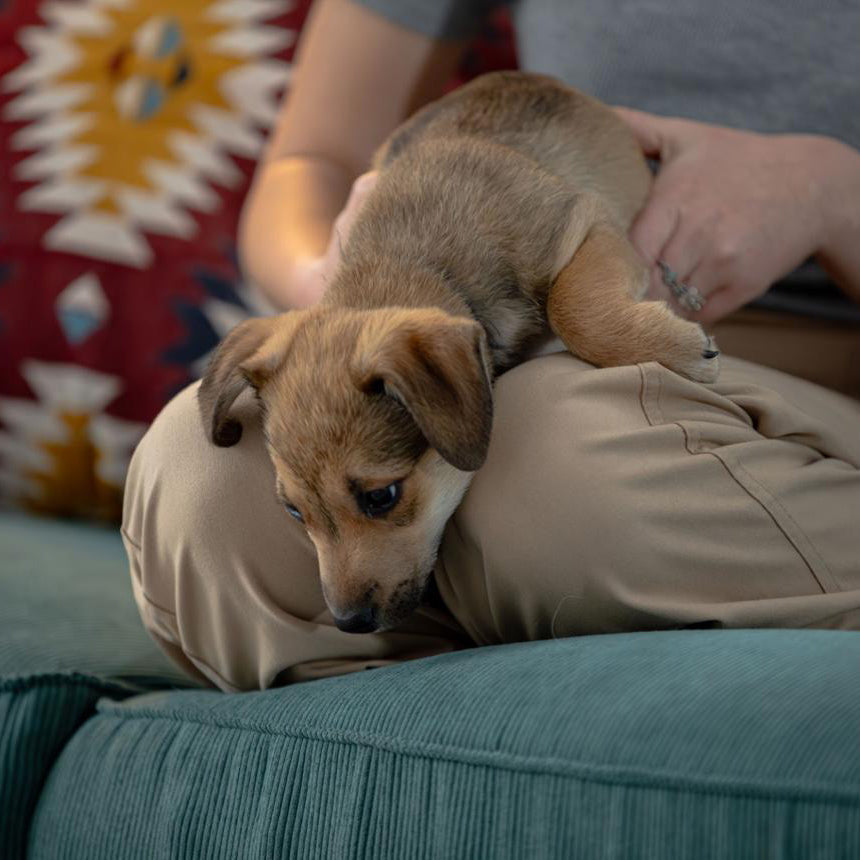
To teach a puppy to relax at home, reward calm behavior with small puppy training treats, avoid responding to every demand, create a calm spot, schedule naps, and practise short “doing nothing” sessions daily.
Before practising: offer a toilet break, fresh water and appropriate food, activity and rest. Do not ignore panic, pain, persistent crying or a sudden behaviour change. Speak to your vet when these occur. Use rewards and brief sessions, consistent with AVSAB humane training guidance.
Why First-Time Owners Struggle With This
Most beginners accidentally train the opposite of calmness.
Here’s how it usually happens:
- Puppy is awake → you play with them
- Puppy is bored → you give a toy
- Puppy demands attention → you respond
- Puppy is quiet → you ignore
Your puppy quickly learns:
“Being active gets me attention. Being calm gets me nothing.”
So they stay… active. All the time.
What a “Calm Puppy” Actually Looks Like

@photo by: PetHelpful
Before we fix it, let’s define it.
A calm puppy isn’t:
- Perfectly obedient
- Sleeping 24/7
- Ignoring everything
A calm puppy can settle without needing you constantly.
They might:
- Lie down while you scroll your phone
- Chill near you while you work
- Watch the world without reacting to everything
That’s the goal—not perfection, just peaceful coexistence.
The Biggest Mindset Shift for New Owner

Start asking:
✅ “How do I teach my puppy to switch off?”
Because here’s the truth:
A tired puppy can still be chaotic.
A trained calm puppy chooses to relax.
5 Simple Steps (Perfect for Beginners)
 @photo by: Shutterstock
1. Start Noticing Calm Moments
Your puppy already relaxes, you’re just not noticing it.
Maybe they:
- Sit quietly for 5 seconds
- Lie down randomly
- Pause between play
The moment you see it, gently reward.
No excitement. No “GOOD BOY!!!”
Just calm reinforcement:
- Drop a treat
- Soft “good”
- Then move on
This teaches:
“This state is valuable.”
Tip: Keep a few small dog training treats nearby so you can reward calm moments before your puppy becomes excited.
2. Don’t Respond to Every Attention Request
 @photo by: istock
This is hard, but critical.
Your puppy will:
- Paw you
- Bark
- Jump
- Bring toys constantly
If you respond every time, you teach:
“I control when humans engage.”
Instead:
- First check toilet, hunger, thirst, pain and distress; when needs are met, wait briefly for calm
- Wait for even 2 seconds of calm
- THEN reward or engage
You’re rewarding calmness, not persistence.
3. Use a “Calm Spot” (Your Secret Weapon)

First-time owners often let puppies roam everywhere… which keeps them overstimulated.
Instead, create a go-to relaxation zone:
Use it for:
- Chewing
- Resting
- Post-play cooldown
Over time, your puppy thinks:
“This place = chill mode.”
Tip: You can also use single-ingredient dog treats for calm-place training, especially if your puppy does better with simple rewards.
4. Schedule Nap Time (Yes, Seriously)
 @photo by: Pexels
Most new owners miss this.
Puppies need:
18–20 hours of sleep daily
Without it, they become:
- Bitey
- Hyper
- Impossible to settle
If your puppy is “crazy,” they’re often just overtired.
Fix it by:
- Enforcing naps every 1–2 hours of activity
- Using a crate or quiet area
- Reducing stimulation
Progress varies with age, health, temperament and routine.
5. Practice “Doing Nothing” Together

This is the most underrated exercise for beginners.
Sit with your puppy and:
- No toys
- No talking
- No training
Just exist.
At first, your puppy may:
- Try to engage you
- Get restless
- Wander
Check that your puppy is comfortable and their needs are met. Pause the exercise if they become distressed.
When they finally settle—even briefly—reward calmly.
You’re teaching:
“We don’t always need to be doing something.”
Common First-Time Owner Mistakes
Avoid these and you’ll be ahead of 90% of new dog owners:
- ❌ Overplaying to “burn energy”
- ❌ Giving attention when demanded
- ❌ Thinking hyper = happy
- ❌ Skipping naps
- ❌ Only rewarding excitement
What Progress Looks Like (Realistic Expectations)
Week 1:
- Puppy settles for short moments
Week 2–3:
- Settles faster, more often
Week 4+:
- Starts choosing calm behavior on their own
Consistency matters more than perfection.
The Payoff You’ll Feel Every Day
When you teach this early, your future dog will:
- Relax while you work or watch TV
- Not demand constant entertainment
- Practise settling near you; comfortable alone time needs separate gradual training
- Fit naturally into your lifestyle
That’s what most first-time owners actually want, they just don’t realize how to get there.
FAQ
How do I calm a hyper puppy at home?
Start by reducing stimulation, giving your puppy a quiet nap area, and rewarding small calm moments. Avoid playing every time your puppy demands attention.
Why is my puppy so hyper at night?
Many puppies become hyper at night because they are overtired or overstimulated. A scheduled nap routine and calm evening environment can help.
Should I ignore my puppy when they bark for attention?
If the barking is attention-seeking and your puppy’s needs are met, wait for a brief calm moment before responding. This teaches that calm behavior gets attention, not barking.
How many hours should a puppy sleep?
Many young puppies need around 18–20 hours of sleep per day. Without enough rest, puppies often become bitey, restless, and harder to settle.
Final Thought (For New Puppy Parents)
You don’t need to entertain your puppy all day.
You don’t need to exhaust them into calmness.
You just need to teach them one powerful lesson:
Calm is safe. Calm is rewarding. Calm is normal.
When teaching calm behavior, choose small treats that are easy to give quickly. Soft puppy treats work well for frequent rewards, while single-ingredient treats are a good option for owners who prefer simpler ingredients.
Browse puppy-friendly dog treats here.
Start today! Even with just a few quiet rewards and you’ll build a dog that doesn’t just listen…
…but knows how to live peacefully with you.
A short settling session
- Choose a quiet moment after your puppy’s needs have been met. Put a familiar mat near you.
- Reward a voluntary pause or relaxed lie-down with a small piece from their daily treat allowance.
- Wait for another easy calm moment, reward quietly, and finish while your puppy is comfortable. Try one or two minutes first and shorten the session if needed.
Related CreatureLand guides
Continue with recognising anxiety, choosing training support, setting up a resting space.

Written by Creatureland store


Leave a comment
This site is protected by hCaptcha and the hCaptcha Privacy Policy and Terms of Service apply.