Article: Picky Cat? Cat Wet Food Textures Could Be the Reason
Picky Cat? Cat Wet Food Textures Could Be the Reason
Picky Cat? Cat Wet Food Textures Could Be the Reason
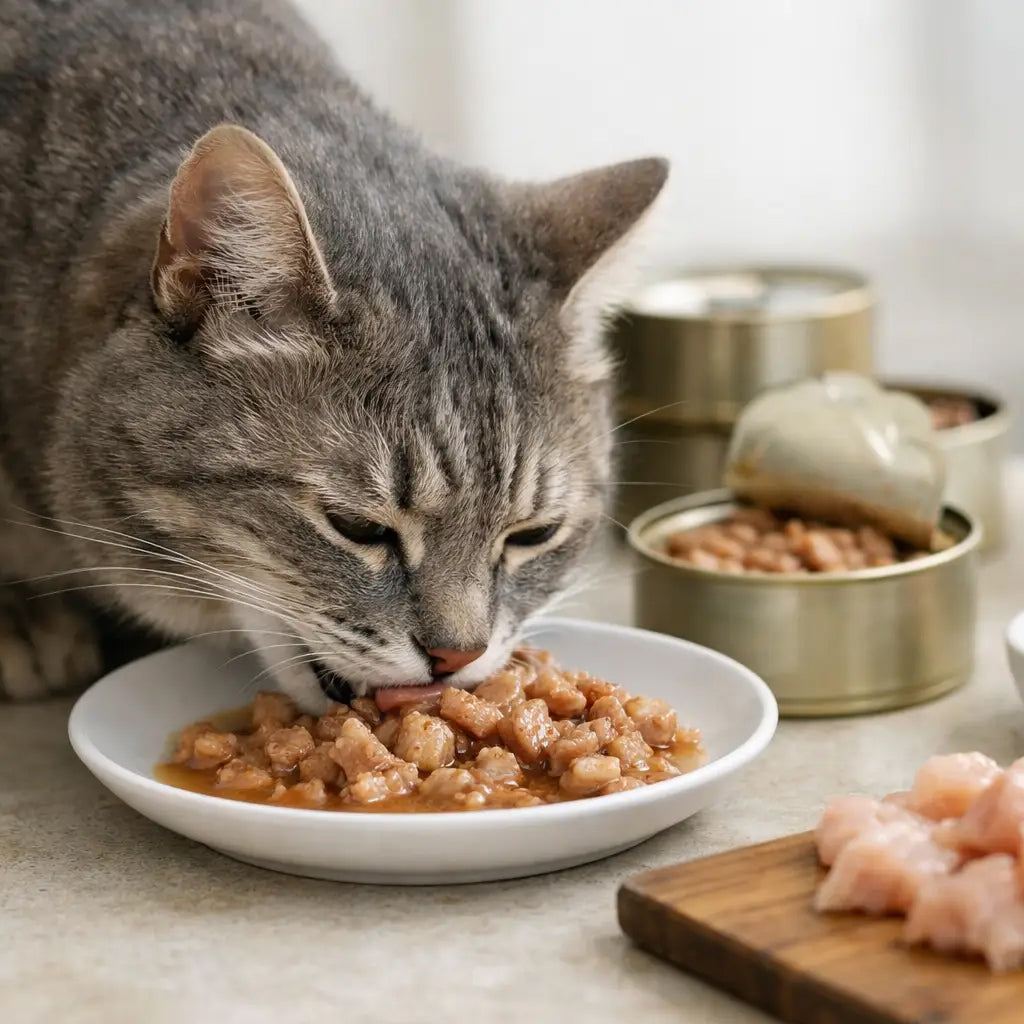
Choosing cat wet food is easier when you understand texture. Pâté is smooth and dense, mousse is soft and airy, flaked food has small soft pieces, shredded food has visible strands, broth is mostly liquid, morsels give cats a saucy bite, and gravies combine small pieces with a generous sauce. The best texture is the one your cat eats consistently, tolerates well, and can chew or lick comfortably.
Ready to Explore Cat Wet Food?
CreatureLand carries a curated range of cat wet food, broths, toppers and complete meals for different preferences, from smooth pâté to shredded-in-broth meals and saucy morsels.
Quick Answer: Which Cat Wet Food Texture Should You Choose?
For Cats Who Lick More Than They Chew
Start with pâté, mousse or broth. These textures are easier to lick and can feel less demanding than large pieces.
For Cats Who Like Visible Meat
Try flaked or shredded wet food. These textures have softer pieces or strands, so they can feel more natural to cats who enjoy chewing.
For Cats Who Love Sauce
Try broth, morsels in sauce or gravies. Just check whether your cat eats the solid pieces too, not only the liquid.
Check Whether It Is Complete or Complementary
Complete food can provide your cat’s daily nutrition for the stated life stage when fed as directed. Complementary food needs to be used alongside suitable food. Check the feeding statement before choosing a main diet.
Change Slowly
Offer a small amount beside your cat’s usual food first. Texture changes can matter as much as flavour for picky cats.
Complete vs Complementary Cat Food: What’s the Difference?
Texture describes how food feels. The feeding statement tells you whether it can provide your cat’s daily nutrition on its own.
Complete Cat Food
Complete cat food provides all the essential nutrients your cat needs in the right proportions when fed as directed. It can be the main diet for the life stage stated on the label.
Check whether the recipe is suitable for kittens, adult maintenance or all life stages. Fresh drinking water should still be available.
Complementary Cat Food
Complementary cat food does not meet all nutritional needs when fed alone. It is intended to be used alongside other suitable food, following the feeding instructions.
This may include a broth, topper or meat-based recipe. Use it as directed alongside a complete diet rather than treating it as a replacement for a complete meal.
| What to check | Complete food | Complementary food |
|---|---|---|
| Daily nutrition | Meets nutritional needs for the stated life stage when fed as directed | Does not meet all nutritional needs on its own |
| How to use it | As the main diet, following the feeding guide | Alongside suitable food, following the label |
| What the label may say | “Complete pet food” or “complete and balanced” with a life-stage statement | “Complementary pet food” or “for intermittent or supplemental feeding only” |
If the feeding statement is unclear, check with the manufacturer before making it your cat’s main food.
Sources: UK Pet Food: complete and complementary foods and FEDIAF: nutritional requirements .
Back to Quick LinksWhat Are the Main Types of Cat Wet Food Texture?
The main cat wet food textures are pâté, mousse, flaked, shredded, broth, morsels and gravies. These textures feel different in the mouth, smell different when served, and change how much licking or chewing your cat needs to do.
Texture matters because many cats are selective eaters. A cat may reject chicken pâté but happily eat chicken shreds in broth, or lick the sauce from morsels while leaving the pieces behind. If your cat is healthy but picky, texture testing can help you learn what kind of food they actually prefer.
Back to Quick LinksCat Wet Food Texture Comparison
| Texture | What it looks like | Best for | Watch out for |
|---|---|---|---|
| Pâté | Smooth, firm and spreadable | Cats who like a uniform texture | Some cats find it too dense unless loosened with water |
| Mousse | Soft, whipped and easy to lick | Cats who prefer gentle textures | Can be eaten quickly, so portion control still matters |
| Flaked | Small soft pieces, often fish-like | Cats who like visible pieces without larger bites | Check whether it is complete or complementary |
| Shredded | Thin strands or strips in liquid | Cats who enjoy chewing soft meat-like pieces | May be harder for cats with mouth discomfort |
| Broth | Mostly liquid, sometimes with fine pieces | Adding moisture, smell and lickable texture | Check the label; many broth products are toppers |
| Morsels | Small, soft bites in sauce or gravy | Cats who enjoy distinct pieces and a saucy bite | Some cats lick sauce and leave the solid pieces |
| Gravies | Small pieces in a generous gravy or sauce | Cats who enjoy sauce and smaller bites | Check that your cat eats the pieces too; sauce alone is not a balanced serving |
Pâté: Smooth and Spreadable

Pâté cat food has a smooth, uniform texture. It is usually firm enough to hold its shape when scooped from a can, but soft enough to mash with a fork. For cats who dislike pieces, strings or morsels, pâté can be the easiest wet food texture to accept.
Pâté is useful when you want a consistent bite from the first mouthful to the last. It can also be mixed with a small amount of warm water to make it softer and more aromatic. Cornell’s hydration guidance notes that feeding wet food or adding water to food can help increase water intake.
Choose pâté if your cat:
- Licks food instead of chewing it
- Leaves morsels behind
- Prefers smooth textures
- Needs food that can be mashed easily
Skip or soften pâté if your cat walks away after a few licks. Some cats prefer movement and sauce in the bowl, so a dense pâté may feel boring or heavy to them.
Mousse: Soft and Airy

Mousse is usually lighter and softer than pâté. It has a whipped texture that is easy for many cats to lick. Senior cats, kittens learning wet food, or cats who dislike chewing may find mousse more approachable than morsels.
Mousse can also work well when you are introducing wet food to a cat that usually eats dry food. Serve a small spoonful beside their usual meal instead of replacing the bowl immediately. If they lick it clean, you can slowly increase the amount over several meals.
Choose mousse if your cat:
- Prefers soft, smooth food
- Is new to wet food
- Tends to lick rather than bite
- Leaves larger pieces behind
If your cat needs a therapeutic diet or has dental pain, ask your veterinarian what texture is suitable. A soft food can make eating easier, but it does not treat the underlying cause of pain.
Flaked: Small Soft Pieces

Flaked wet food has visible pieces that are smaller and softer than many morsel-style foods. Fish-based wet foods are often flaked because the meat naturally separates into fine pieces.
This texture can be a helpful middle ground for cats who reject smooth pâté but do not enjoy large pieces. It still gives visual meat texture while staying soft enough for many cats to eat comfortably.
Choose flaked wet food if your cat:
- Likes fish-style pieces
- Eats visible meat but avoids larger bites
- Gets bored with smooth textures
- Prefers softer bites
Check the label carefully. Some flaked fish products are designed as complementary foods or toppers, not complete daily meals.
Shredded: Visible Strands in Liquid

Shredded wet food has visible strands or strips, often served in broth. It can appeal to cats who enjoy the feeling of meatier food without needing to chew firm pieces.
This texture is useful for cats who reject pâté but enjoy soft strands. It can also help you understand whether your cat prefers poultry shreds, fish flakes or smaller morsels.
Choose shredded food if your cat:
- Enjoys chewing soft strands
- Likes visible meat texture
- Rejects smooth wet food
- Eats the solid pieces as well as the liquid
If your cat drops food, chews on one side, or suddenly avoids shredded pieces they previously enjoyed, arrange a veterinary check to rule out mouth discomfort.
Broth: Liquid with Aroma

Broth-style foods are more liquid than regular wet food. They can make a meal smell more interesting and add moisture to the bowl. They are especially helpful when a cat is willing to lick liquid but hesitant about eating a full portion.
Merck Veterinary Manual notes that canned dog and cat foods typically contain 68% to 78% water, and cats eating mostly canned food often drink less water than cats eating mostly dry diets because they get more water from food. Wet meals, broths and added water can all support total fluid intake, but fresh drinking water should still be available.
Use broth:
- As a topper over complete food
- To soften pâté
- To add aroma to a meal
- To encourage licking for cats who enjoy liquid textures
Do not assume every broth is a complete meal. Many are toppers. If the label says “complementary” or “for intermittent feeding”, use it alongside a complete diet.
Morsels: Small, Soft Bites in Sauce

Morsels are small, soft bites of cat food served in sauce or gravy. They may be rounded pieces, small cubes or bite-sized cuts. This texture can appeal to cats because it combines distinct pieces with an aromatic sauce.
Morsels can be a good bridge for cats who are curious about wet food but do not like smooth pâté. They give your cat something to lick first, then chew. The main thing to check is whether your cat eats the pieces too. If they only lick the sauce, they may not be getting the full nutrition from the serving.
Choose morsels if your cat:
- Licks sauce first
- Likes strong aroma
- Enjoys small soft pieces
- Gets bored with smooth food
Try mashing the pieces smaller if your cat leaves them behind. You can also test flaked or shredded textures, which may feel more natural to some cats than formed bites.
Gravies: Small Pieces in Sauce

Gravies combine small cuts or pieces with a generous sauce. Compared with broth, gravy is usually thicker and clings to the food. Compared with larger morsels, gravy-style recipes may have finer pieces, although texture names vary between brands.
This can suit cats who enjoy licking sauce before eating the meat. If your cat leaves larger morsels behind, try a gravy recipe with smaller pieces, or gently mash the pieces into the sauce.
Choose gravies if your cat:
- Enjoys saucy meals
- Prefers smaller pieces to larger morsels
- Licks sauce first, then eats the solids
- Dislikes dense, smooth pâté
Watch whether your cat finishes both the gravy and the pieces. Licking only the sauce from a complete meal does not provide the nutrition of the full serving. Check the label to confirm whether the recipe is complete and appropriate for your cat’s life stage.
How to Switch Wet Food Textures
Change one thing at a time: texture, flavour or brand. If you change all three at once, it becomes harder to tell what your cat liked or disliked.
- Put a teaspoon of the new texture beside the usual food.
- Let your cat smell and investigate without pressure.
- If they eat it, repeat for a few meals.
- Increase slowly while reducing the old food.
- Pause if you see vomiting, diarrhoea, itching, major appetite change or refusal to eat.
Cats should not go without food for long. Cornell warns that feeding too little or the wrong kind of food can put cats at risk of serious health issues. If your cat stops eating, contact your veterinarian promptly.
Back to Quick LinksHow Should You Store Opened Cat Wet Food?
Cover and refrigerate opened wet food, then use it within the timeframe stated on the product label. Discard food that has been left out too long, smells unusual, has changed colour, or has dried out.
For fussy cats, chilled food may smell less appealing. You can bring a small serving closer to room temperature before feeding, or stir in a little warm water if the product allows it. Do not microwave food until hot; uneven heating can create hot spots.
Back to Quick LinksWhich Texture Should Picky Cats Try First?
For picky cats, start with the texture closest to what they already accept. A cat who licks sauce from meals may prefer broth, mousse or softened pâté. A cat who steals small bits of cooked meat may prefer shredded or flaked wet food.
Use this simple test:
| If your cat does this | Try this texture |
|---|---|
| Licks sauce and leaves morsels | Broth, mousse, pâté loosened with water |
| Eats morsels but ignores pâté | Morsels, shreds, flakes |
| Sniffs food and walks away | Gently warmed mousse, broth topper, stronger aroma |
| Only likes dry food | Tiny side serving of mousse or morsels beside kibble |
| Eats too quickly | Pâté spread thinly on a lick mat or slow feeder |
Questions About Cat Wet Food Textures
Is wet food better than dry food for cats?
Wet food and dry food can both fit into a cat’s diet if they are complete and balanced for the cat’s life stage. Wet food has more moisture, while dry food is convenient to store and serve. The best choice depends on your cat’s health, preferences and your veterinarian’s advice.
Is pâté better than mousse for cats?
Pâté is not automatically better than mousse. Pâté gives a smooth, denser texture, while mousse is lighter and easier to lick. Choose based on what your cat eats well, and check whether the food is complete.
Should I choose flaked or shredded cat food?
Choose flaked food if your cat likes smaller, softer pieces. Choose shredded food if your cat enjoys visible strands and drinking the broth or sauce around them.
Why does my cat lick the broth or sauce and leave the morsels?
Your cat may like the smell and liquid but dislike the shape, firmness or mouthfeel of the morsels. Try mashing the pieces, switching to smaller flakes, or offering mousse or pâté loosened with warm water.
Can I mix water into wet cat food?
Yes, you can usually mix a small amount of water into wet cat food if your cat accepts it and the product label does not say otherwise. Start with a teaspoon so the smell and texture do not change too much.
Is broth cat food a complete meal?
Not always. Some broth-style products are complete meals, while others are toppers or complementary foods. Check the feeding statement on the label before using broth as your cat’s main meal.
What is the difference between complete and complementary cat food?
Complete cat food can meet your cat’s nutritional needs for the stated life stage when fed as directed. Complementary food does not meet all nutritional needs on its own and should be used alongside suitable food according to its label.
Can I feed complementary cat food as the main diet?
Complementary food should not be your cat’s sole diet. Follow its feeding instructions and use it alongside a complete diet. If you are unsure how a product fits into your cat’s meals, check with the manufacturer or your veterinarian.
What wet food texture is best for senior cats?
Many senior cats prefer softer textures such as mousse, pâté, broth or morsels mashed into smaller pieces. If your senior cat drops food, chews strangely, loses weight or avoids harder textures, arrange a veterinary check to rule out dental pain or illness.
How many wet food textures should I keep at home?
Two or three accepted textures are useful. For example, a smooth option, a shredded or flaked option, and a broth or saucy morsels option give you flexibility if your cat gets bored or needs a softer meal.
Final Thoughts
Cat wet food texture is often the missing piece when a cat seems picky. Instead of changing flavours over and over, look at how the food feels: smooth, airy, flaked, shredded, brothy, formed into morsels or coated in gravy.
Start with a small serving, keep the rest of the meal familiar, and let your cat show you what they prefer. Once you know the texture they enjoy, choosing wet food becomes much easier.
Before making a recipe your cat’s main meal, check that it is complete and suitable for their life stage. Use complementary foods according to their feeding instructions.
Back to Quick LinksFind Their Favourite Texture
Explore wet food, broths and toppers to suit the way your cat likes to eat.



Leave a comment
This site is protected by hCaptcha and the hCaptcha Privacy Policy and Terms of Service apply.